Treatment Guide
Ultherapy in Korea: What Foreign Patients Should Know Before Treatment
A complete guide to Ultherapy in Korea, including how it works, who it may suit, expected results, downtime, pain levels, and booking considerations for international patients.
What is Ultherapy?
+
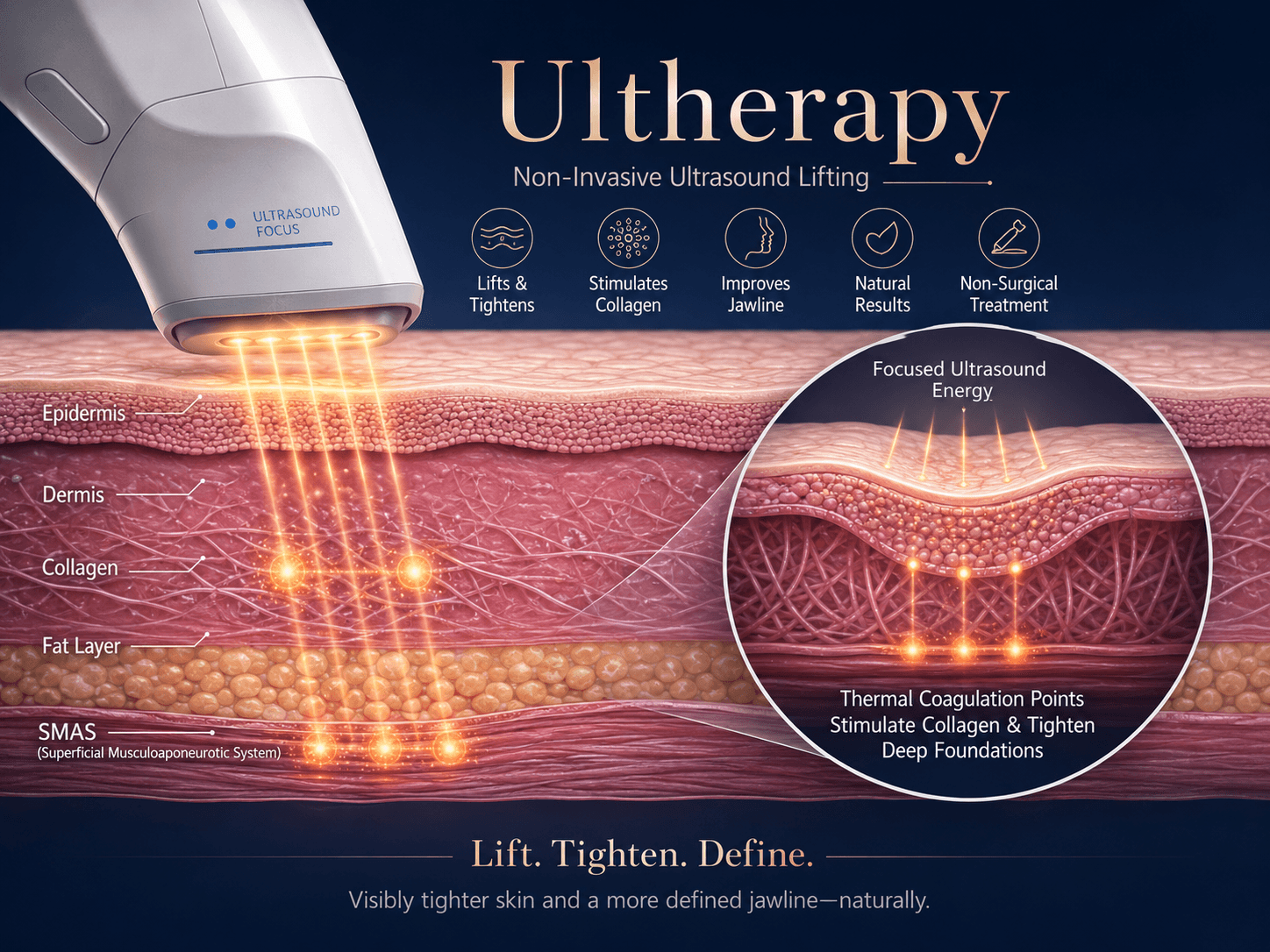
Ultherapy is one of the most widely recognized lifting treatments in Korea. It uses focused ultrasound energy to target deeper tissue layers beneath the skin without surgery.
Unlike skin boosters or fillers, Ultherapy is generally discussed as a lifting and tightening treatment rather than a volume-enhancing treatment. Patients often consider Ultherapy when they are concerned about mild facial sagging, jawline definition, or skin firmness.
The treatment has become particularly popular among international visitors because many Korean clinics offer extensive experience with non-surgical lifting procedures.
Who is Ultherapy usually best for?
+
Ultherapy is often considered by patients experiencing early to moderate signs of facial laxity. Common concerns include a softer jawline, slight cheek descent, lower-face heaviness, or reduced skin firmness.
It may be a suitable option for people who are not interested in surgery but want to explore non-invasive lifting treatments.
However, expectations are important. Patients with significant skin laxity may require a different treatment strategy or a combination approach rather than relying on Ultherapy alone.
How does Ultherapy work?
+
Ultherapy uses focused ultrasound energy delivered beneath the skin surface. The goal is to stimulate the body's natural response within deeper structural layers.
One reason Ultherapy became popular is that it can target deeper tissue without requiring surgical incisions.
The treatment process usually includes consultation, facial assessment, treatment planning, and the ultrasound procedure itself.
What results should you expect?
+
Patients should not expect immediate dramatic lifting. Many clinics describe Ultherapy as a gradual improvement treatment rather than an instant transformation.
Some people notice subtle changes relatively early, while others see progressive improvement over several months.
Results vary depending on age, skin quality, facial anatomy, treatment area, energy settings, and individual biological response.
Ultherapy vs Thermage
+
Ultherapy and Thermage are among the most commonly compared lifting procedures in Korea.
Ultherapy uses focused ultrasound energy, while Thermage uses radiofrequency energy. Both treatments may be used for skin tightening, but clinics often recommend one over the other depending on the patient's concerns.
Some clinics even recommend combination treatment plans. There is no universal answer regarding which treatment is better because suitability depends on individual goals and anatomy.
Is Ultherapy painful?
+
Pain perception varies significantly from person to person. Some patients describe the treatment as uncomfortable, while others tolerate it relatively well.
The sensation is often described as brief bursts of energy beneath the skin. Many clinics use comfort management techniques to improve the treatment experience.
Before booking, foreign patients should ask how the clinic manages discomfort and what options are available during treatment.
Downtime after Ultherapy
+
One reason many travelers consider Ultherapy is the relatively limited downtime compared with more invasive procedures.
Temporary redness, mild swelling, tenderness, or sensitivity can occur after treatment. These effects are typically temporary, but individual recovery varies.
If you are planning important events, photoshoots, or business meetings, it is still wise to discuss timing with your clinic beforehand.
How many sessions are needed?
+
Many patients undergo a single session and then evaluate results over time. Others may repeat treatment according to professional recommendations and individual goals.
The appropriate treatment frequency depends on age, skin quality, degree of laxity, and desired outcome.
A consultation is the best way to determine whether a single session is appropriate or whether a longer-term maintenance plan makes sense.
What should foreign patients ask before booking?
+
Ask whether the treatment is suitable for your concerns, who performs the procedure, how discomfort is managed, and what type of follow-up care is provided.
It is also important to ask whether English-language consultation is available and whether the clinic has experience treating international visitors.
Price should not be the only factor. Experience, consultation quality, treatment planning, and aftercare can be equally important when choosing a clinic.
Should you get Ultherapy while visiting Korea?
+
Ultherapy can be a practical option for international patients because it generally requires limited downtime and does not involve surgery.
However, patients should approach treatment with realistic expectations. The goal is usually gradual lifting and tightening rather than dramatic restructuring.
The best approach is to compare clinics, understand expected outcomes, ask detailed questions during consultation, and choose a clinic that matches your goals rather than selecting solely based on promotional pricing.
What is Ultherapy?
Ultherapy is one of the most widely recognized lifting treatments in Korea. It uses focused ultrasound energy to target deeper tissue layers beneath the skin without surgery.
Unlike skin boosters or fillers, Ultherapy is generally discussed as a lifting and tightening treatment rather than a volume-enhancing treatment. Patients often consider Ultherapy when they are concerned about mild facial sagging, jawline definition, or skin firmness.
The treatment has become particularly popular among international visitors because many Korean clinics offer extensive experience with non-surgical lifting procedures.
Who is Ultherapy usually best for?
Ultherapy is often considered by patients experiencing early to moderate signs of facial laxity. Common concerns include a softer jawline, slight cheek descent, lower-face heaviness, or reduced skin firmness.
It may be a suitable option for people who are not interested in surgery but want to explore non-invasive lifting treatments.
However, expectations are important. Patients with significant skin laxity may require a different treatment strategy or a combination approach rather than relying on Ultherapy alone.
How does Ultherapy work?
Ultherapy uses focused ultrasound energy delivered beneath the skin surface. The goal is to stimulate the body's natural response within deeper structural layers.
One reason Ultherapy became popular is that it can target deeper tissue without requiring surgical incisions.
The treatment process usually includes consultation, facial assessment, treatment planning, and the ultrasound procedure itself.
What results should you expect?
Patients should not expect immediate dramatic lifting. Many clinics describe Ultherapy as a gradual improvement treatment rather than an instant transformation.
Some people notice subtle changes relatively early, while others see progressive improvement over several months.
Results vary depending on age, skin quality, facial anatomy, treatment area, energy settings, and individual biological response.
Ultherapy vs Thermage
Ultherapy and Thermage are among the most commonly compared lifting procedures in Korea.
Ultherapy uses focused ultrasound energy, while Thermage uses radiofrequency energy. Both treatments may be used for skin tightening, but clinics often recommend one over the other depending on the patient's concerns.
Some clinics even recommend combination treatment plans. There is no universal answer regarding which treatment is better because suitability depends on individual goals and anatomy.
Is Ultherapy painful?
Pain perception varies significantly from person to person. Some patients describe the treatment as uncomfortable, while others tolerate it relatively well.
The sensation is often described as brief bursts of energy beneath the skin. Many clinics use comfort management techniques to improve the treatment experience.
Before booking, foreign patients should ask how the clinic manages discomfort and what options are available during treatment.
Downtime after Ultherapy
One reason many travelers consider Ultherapy is the relatively limited downtime compared with more invasive procedures.
Temporary redness, mild swelling, tenderness, or sensitivity can occur after treatment. These effects are typically temporary, but individual recovery varies.
If you are planning important events, photoshoots, or business meetings, it is still wise to discuss timing with your clinic beforehand.
How many sessions are needed?
Many patients undergo a single session and then evaluate results over time. Others may repeat treatment according to professional recommendations and individual goals.
The appropriate treatment frequency depends on age, skin quality, degree of laxity, and desired outcome.
A consultation is the best way to determine whether a single session is appropriate or whether a longer-term maintenance plan makes sense.
What should foreign patients ask before booking?
Ask whether the treatment is suitable for your concerns, who performs the procedure, how discomfort is managed, and what type of follow-up care is provided.
It is also important to ask whether English-language consultation is available and whether the clinic has experience treating international visitors.
Price should not be the only factor. Experience, consultation quality, treatment planning, and aftercare can be equally important when choosing a clinic.
Should you get Ultherapy while visiting Korea?
Ultherapy can be a practical option for international patients because it generally requires limited downtime and does not involve surgery.
However, patients should approach treatment with realistic expectations. The goal is usually gradual lifting and tightening rather than dramatic restructuring.
The best approach is to compare clinics, understand expected outcomes, ask detailed questions during consultation, and choose a clinic that matches your goals rather than selecting solely based on promotional pricing.
Need help choosing a clinic?
Tell us your treatment goals and travel schedule. KSkinPick can help you compare suitable Korean skin clinic options.
Free ConsultationFAQ
How long does Ultherapy last?
+
Results vary between individuals. Longevity depends on age, skin condition, lifestyle, and natural aging processes.
Is Ultherapy better than Thermage?
+
Neither treatment is universally better. They use different technologies and may be recommended for different concerns.
Can I fly after Ultherapy?
+
Many patients are able to travel shortly after treatment, but individual circumstances vary. Follow your clinic's recommendations.
Does Ultherapy have downtime?
+
Downtime is generally limited, but temporary redness, swelling, tenderness, or sensitivity can occur.
How do I choose an Ultherapy clinic in Korea?
+
Consider consultation quality, provider experience, communication support, aftercare, and treatment planning rather than focusing only on price.
How long does Ultherapy last?
Results vary between individuals. Longevity depends on age, skin condition, lifestyle, and natural aging processes.
Is Ultherapy better than Thermage?
Neither treatment is universally better. They use different technologies and may be recommended for different concerns.
Can I fly after Ultherapy?
Many patients are able to travel shortly after treatment, but individual circumstances vary. Follow your clinic's recommendations.
Does Ultherapy have downtime?
Downtime is generally limited, but temporary redness, swelling, tenderness, or sensitivity can occur.
How do I choose an Ultherapy clinic in Korea?
Consider consultation quality, provider experience, communication support, aftercare, and treatment planning rather than focusing only on price.