Treatment Guide
Thermage in Korea: FLX Price, Results and What to Know
A practical guide to Thermage FLX in Korea, including price ranges, shot counts, downtime, who it may suit, and how it compares with Ultherapy and Korean RF devices.
What is Thermage?
+
Thermage is a non-invasive radiofrequency lifting and tightening treatment. In Korea, Thermage FLX is commonly used for patients who want skin tightening, smoother texture, and subtle firmness without needles or surgery.
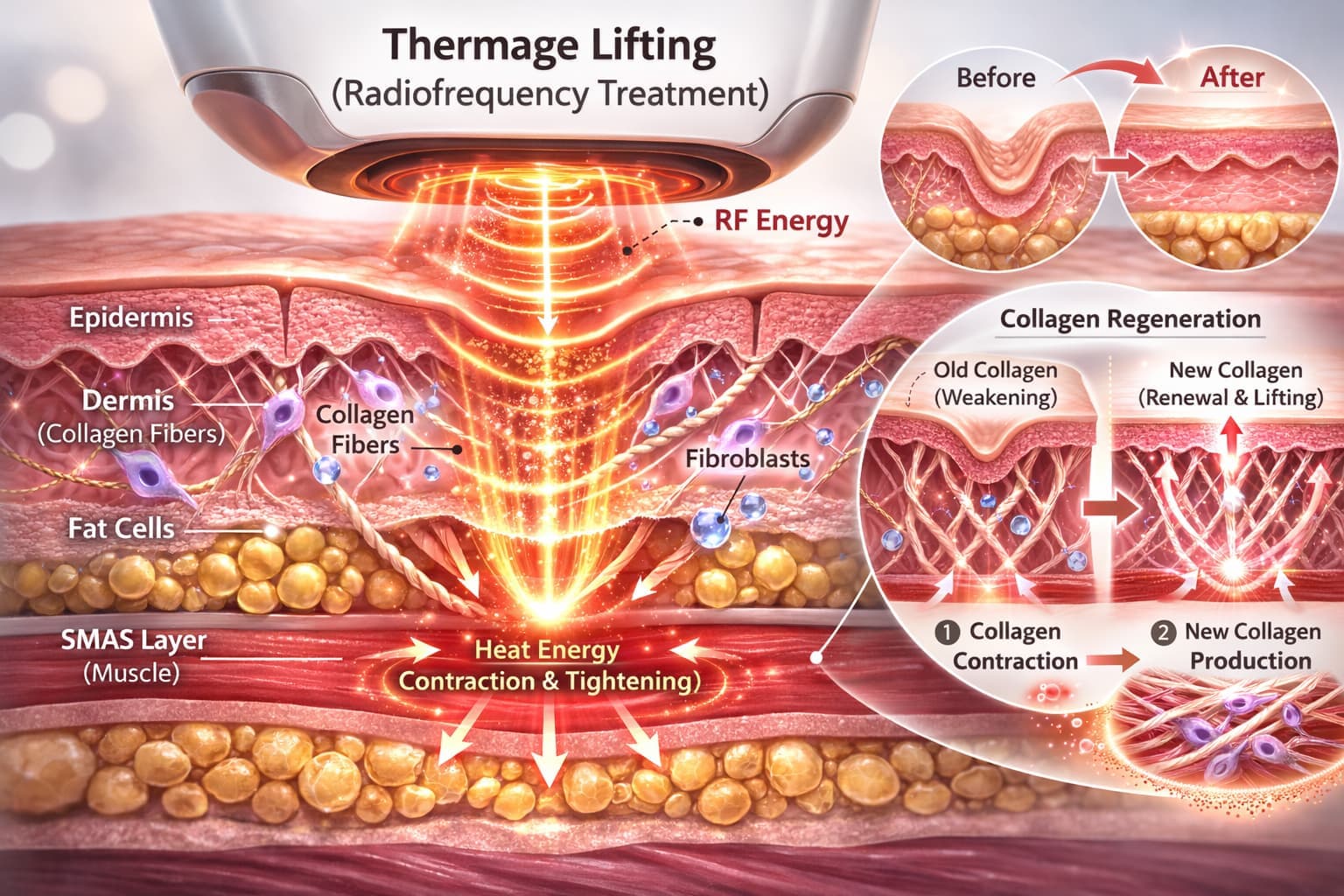
Thermage works differently from ultrasound lifting treatments such as Ultherapy or Shurink. Instead of focused ultrasound, it uses monopolar radiofrequency energy to heat deeper layers of the skin and support collagen remodeling.
It is often chosen for the face, jawline, eyelids, and areas where the skin looks loose or crepey. The result is usually gradual and natural-looking rather than dramatic or instant.
Who is Thermage best for?
+
Thermage may suit patients with mild skin laxity, soft jawline definition, fine lines, or skin that feels thinner and less firm than before. It is especially popular among people who want tightening without injections or visible downtime.
It may also be considered for patients who are not ready for thread lifting, surgery, or more invasive procedures. Many clinics position Thermage as a premium maintenance treatment for long-term skin aging management.
However, Thermage may not be enough for severe sagging, heavy jowls, or deep folds. A clinic may suggest combining it with Ultherapy, Oligio, injectables, or other treatments depending on the face shape and skin condition.
Thermage price in Korea
+
Thermage FLX is one of the more expensive non-surgical skin tightening treatments in Korea. Based on 2026 public price references, Thermage in Korea is often quoted around $2,100 to $2,300 for common packages, while some Seoul clinics advertise Thermage FLX from around ₩790,000 before VAT for limited or specific packages.
Larger packages cost more. For example, some Korean clinic price lists show Thermage FLX 600 shots around ₩1,980,000, and packages combining face and eye Thermage can be listed above ₩4,000,000 depending on shot count and clinic policy.
When comparing Thermage prices, shot count is critical. Eye Thermage, 300 shots, 600 shots, 900 shots, and face-plus-eye packages are not the same. A low starting price may not represent a full-face treatment.
Thermage vs Ultherapy
+
Thermage and Ultherapy are both premium non-surgical lifting treatments, but they use different energy types. Thermage uses radiofrequency, while Ultherapy uses focused ultrasound.
In simple terms, Thermage is often discussed for skin tightening, firmness, and surface-to-deep collagen remodeling. Ultherapy is often discussed for deeper lifting along the jawline, cheeks, and brow area. Some clinics use both because they target aging in different ways.
The better choice depends on your skin thickness, sagging pattern, pain tolerance, budget, and whether your main concern is tightening or lifting. A good clinic should explain why one device is more suitable for your face.
Pain, downtime, and recovery
+
Thermage is non-invasive, but it can still feel hot, sharp, or uncomfortable during treatment. Pain level depends on device settings, treatment area, and personal sensitivity. Modern Thermage FLX is designed to be more comfortable than older generations, but it is not always painless.
Downtime is usually minimal. Some patients experience redness, swelling, warmth, or tenderness, but many return to normal activities quickly. Since there are no injections or open wounds, visible downtime is generally less than microneedling or resurfacing lasers.
Even with low downtime, it is better not to schedule Thermage right before an important event. Some people experience temporary puffiness or sensitivity, and results take time to develop.
How long do Thermage results last?
+
Thermage results are usually gradual. Some patients notice early tightening, but collagen-related improvement may continue over several months.
Many clinics describe Thermage as a treatment that can last several months to over a year depending on age, skin condition, lifestyle, and treatment intensity. Maintenance timing varies by patient.
If you are traveling to Korea, ask whether one Thermage session is realistic for your goal and whether you should combine it with other treatments during the same trip.
What to ask before booking
+
Before booking Thermage in Korea, ask which device generation is used, how many shots are included, whether the tip is genuine, and which areas are covered. Thermage pricing without shot count is not enough information.
You should also ask who performs the procedure and whether the clinic has experience treating your skin type and concern. For premium devices, technique and treatment design are important.
Finally, compare Thermage with alternatives such as Ultherapy, Oligio, Shurink, InMode, or thread lifting. Thermage can be a strong option for the right patient, but it should not be sold as the only lifting solution.
What is Thermage?
Thermage is a non-invasive radiofrequency lifting and tightening treatment. In Korea, Thermage FLX is commonly used for patients who want skin tightening, smoother texture, and subtle firmness without needles or surgery.
Thermage works differently from ultrasound lifting treatments such as Ultherapy or Shurink. Instead of focused ultrasound, it uses monopolar radiofrequency energy to heat deeper layers of the skin and support collagen remodeling.
It is often chosen for the face, jawline, eyelids, and areas where the skin looks loose or crepey. The result is usually gradual and natural-looking rather than dramatic or instant.
Who is Thermage best for?
Thermage may suit patients with mild skin laxity, soft jawline definition, fine lines, or skin that feels thinner and less firm than before. It is especially popular among people who want tightening without injections or visible downtime.
It may also be considered for patients who are not ready for thread lifting, surgery, or more invasive procedures. Many clinics position Thermage as a premium maintenance treatment for long-term skin aging management.
However, Thermage may not be enough for severe sagging, heavy jowls, or deep folds. A clinic may suggest combining it with Ultherapy, Oligio, injectables, or other treatments depending on the face shape and skin condition.
Thermage price in Korea
Thermage FLX is one of the more expensive non-surgical skin tightening treatments in Korea. Based on 2026 public price references, Thermage in Korea is often quoted around $2,100 to $2,300 for common packages, while some Seoul clinics advertise Thermage FLX from around ₩790,000 before VAT for limited or specific packages.
Larger packages cost more. For example, some Korean clinic price lists show Thermage FLX 600 shots around ₩1,980,000, and packages combining face and eye Thermage can be listed above ₩4,000,000 depending on shot count and clinic policy.
When comparing Thermage prices, shot count is critical. Eye Thermage, 300 shots, 600 shots, 900 shots, and face-plus-eye packages are not the same. A low starting price may not represent a full-face treatment.
Thermage vs Ultherapy
Thermage and Ultherapy are both premium non-surgical lifting treatments, but they use different energy types. Thermage uses radiofrequency, while Ultherapy uses focused ultrasound.
In simple terms, Thermage is often discussed for skin tightening, firmness, and surface-to-deep collagen remodeling. Ultherapy is often discussed for deeper lifting along the jawline, cheeks, and brow area. Some clinics use both because they target aging in different ways.
The better choice depends on your skin thickness, sagging pattern, pain tolerance, budget, and whether your main concern is tightening or lifting. A good clinic should explain why one device is more suitable for your face.
Pain, downtime, and recovery
Thermage is non-invasive, but it can still feel hot, sharp, or uncomfortable during treatment. Pain level depends on device settings, treatment area, and personal sensitivity. Modern Thermage FLX is designed to be more comfortable than older generations, but it is not always painless.
Downtime is usually minimal. Some patients experience redness, swelling, warmth, or tenderness, but many return to normal activities quickly. Since there are no injections or open wounds, visible downtime is generally less than microneedling or resurfacing lasers.
Even with low downtime, it is better not to schedule Thermage right before an important event. Some people experience temporary puffiness or sensitivity, and results take time to develop.
How long do Thermage results last?
Thermage results are usually gradual. Some patients notice early tightening, but collagen-related improvement may continue over several months.
Many clinics describe Thermage as a treatment that can last several months to over a year depending on age, skin condition, lifestyle, and treatment intensity. Maintenance timing varies by patient.
If you are traveling to Korea, ask whether one Thermage session is realistic for your goal and whether you should combine it with other treatments during the same trip.
What to ask before booking
Before booking Thermage in Korea, ask which device generation is used, how many shots are included, whether the tip is genuine, and which areas are covered. Thermage pricing without shot count is not enough information.
You should also ask who performs the procedure and whether the clinic has experience treating your skin type and concern. For premium devices, technique and treatment design are important.
Finally, compare Thermage with alternatives such as Ultherapy, Oligio, Shurink, InMode, or thread lifting. Thermage can be a strong option for the right patient, but it should not be sold as the only lifting solution.
Need help choosing a clinic?
Tell us your treatment goals and travel schedule. KSkinPick can help you compare suitable Korean skin clinic options.
Free ConsultationFAQ
How much does Thermage cost in Korea?
+
Thermage FLX in Korea is often quoted around $2,100 to $2,300 for common packages, but Seoul clinic prices can vary from around ₩790,000 for limited packages to over ₩4,000,000 for larger face-and-eye packages.
Is Thermage cheaper in Korea?
+
Thermage in Korea can be cheaper than in some Western countries, but pricing depends on shot count, clinic, treatment area, and package details.
Is Thermage better than Ultherapy?
+
Not necessarily. Thermage uses radiofrequency and is often chosen for tightening, while Ultherapy uses ultrasound and is often chosen for deeper lifting. The better option depends on your face and goal.
Does Thermage have downtime?
+
Downtime is usually minimal, but temporary redness, swelling, warmth, or tenderness can occur.
How much does Thermage cost in Korea?
Thermage FLX in Korea is often quoted around $2,100 to $2,300 for common packages, but Seoul clinic prices can vary from around ₩790,000 for limited packages to over ₩4,000,000 for larger face-and-eye packages.
Is Thermage cheaper in Korea?
Thermage in Korea can be cheaper than in some Western countries, but pricing depends on shot count, clinic, treatment area, and package details.
Is Thermage better than Ultherapy?
Not necessarily. Thermage uses radiofrequency and is often chosen for tightening, while Ultherapy uses ultrasound and is often chosen for deeper lifting. The better option depends on your face and goal.
Does Thermage have downtime?
Downtime is usually minimal, but temporary redness, swelling, warmth, or tenderness can occur.